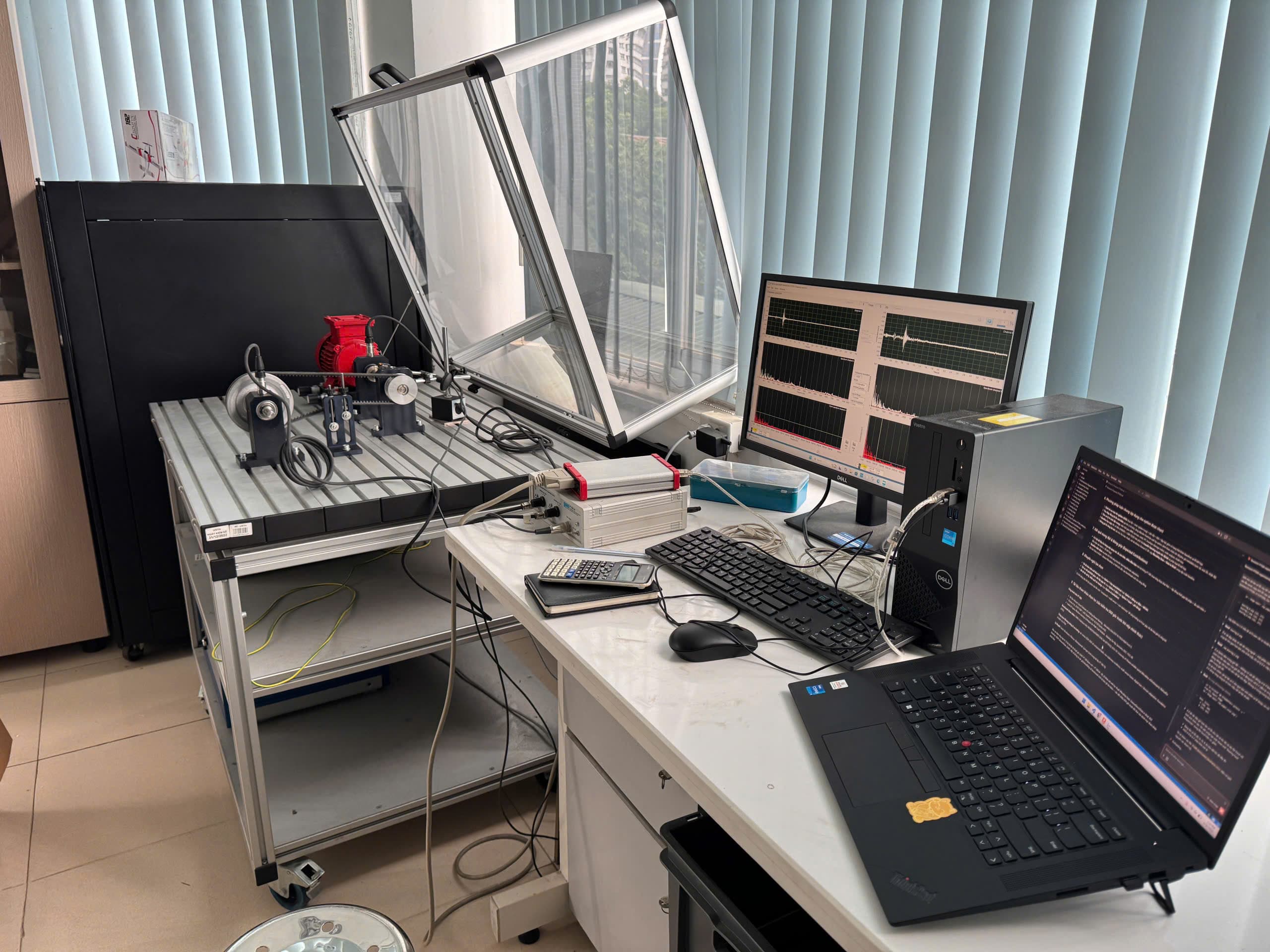
PT500 Vibration Test Rig
Hands-on vibration experiments on rotating machinery
July 2026
I have practical vibration experience with the PT500 machinery diagnostics rig at ITD Lab. I selected and installed the experimental setup, then carried out vibration measurements on the rig to collect data for fault diagnosis research.
My Role
I chose the rig configuration, assembled and mounted the components and sensors, and ran the vibration measurements.
Highlights
- Selected and installed the experimental setup on the PT500 rig.
- Mounted sensors and connected the data acquisition system.
- Carried out vibration measurements and recorded data for analysis.